
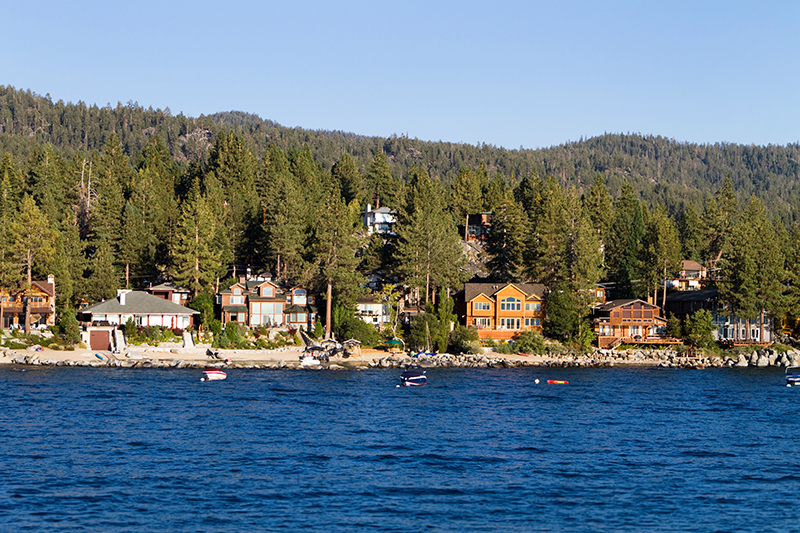
Lake Tahoe is one of California’s best-known places to ski, hike, boat, and relax. Its beauty also makes it a strong vacation-rental market. Airbnb and similar services give visitors more choices than hotels, while giving some owners a way to earn income from a home or condo.
At the same time, Lake Tahoe is home to people who live and work there year-round. Local housing is limited, and many communities are trying to balance visitor lodging with homes for residents. The details matter because Lake Tahoe crosses several cities, counties, and even state lines. A rule in South Lake Tahoe is not automatically a rule in every Tahoe community.
Why Lake Tahoe Short-Term Rentals Are So Popular
Lake Tahoe draws visitors in every season. Winter brings snow sports. Summer brings beaches, boating, hiking, and family trips. Many visitors want a kitchen, extra bedrooms, parking, or a neighborhood setting, so a short-term rental can be a practical fit.
For owners, a vacation rental can help cover the cost of a second home or provide income when they are away. It can also give families and groups a different type of lodging than a hotel. These benefits are a real part of Tahoe’s visitor economy.
Still, a vacation property and a long-term home serve different needs. In a popular destination with a limited number of homes, that difference can shape the local housing market.
Why Residents Worry About Housing, Noise, and Parking
Many permanent residents and local workers want more homes and long-term rentals they can afford. They may worry when homes that could house a local family or worker are instead used mainly for short stays. That concern is especially strong in small mountain communities, where building new housing can be difficult.
Neighborhood issues also matter. A well-managed rental can be quiet and respectful, but repeated turnover can bring concerns about noise, late-night hot-tub use, trash, parking, and large gatherings. Visitors may not know local snow-removal, bear-safety, or parking rules.
These concerns do not mean every short-term rental causes a problem. They explain why many communities ask owners to use permits, local contacts, occupancy limits, and clear guest rules.
How Vacation Rentals Can Change the Long-Term Housing Supply
A short-term rental does not always remove a home from the long-term market. Some are part-time rentals, owner-occupied homes, or properties that would otherwise sit empty. Owners may also use rental income to keep a property.
But when more homes are set aside for visitors, fewer may be available for people seeking a year-round lease. That can make a tight rental market feel even tighter. It can also make it harder for employers to find housing for workers and for renters to stay in the communities where they work.
Buyers should look beyond expected rental income. A home’s rental use can be affected by permits, zoning, homeowners’ association rules, taxes, inspections, local contacts, and changing local laws. Anyone considering a vacation home should plan for the possibility that short-term renting may be limited or unavailable.
South Lake Tahoe and Other Local Short-Term Rental Rules
In the City of South Lake Tahoe, a short-term vacation home rental is generally a rental for fewer than 30 consecutive days and requires a city permit. The City’s rules changed after Measure T was struck down in 2025, and its current program has different treatment inside and outside the Tourist Core.
For residential areas, the City has a permit cap of 900. The Tourist Core is not subject to that cap and has no waitlist. The City says a residential waitlist begins once 900 residential permits have been issued; applications may still be submitted, but an applicant waits for an opening created when a permit holder closes, does not renew, or sells. The City’s issued-permit map is updated hourly, and the City does not publish a count of pending applications. That means buyers should check the current map and speak with the City before relying on a rental plan.
South Lake Tahoe also uses rules meant to reduce neighborhood impacts, including permit requirements, occupancy and parking limits, a 150-foot spacing rule outside the Tourist Core for many properties, and restrictions on late-night outdoor noise and hot-tub use. These are City of South Lake Tahoe rules, not Tahoe-wide rules.
Elsewhere, the rules differ. In unincorporated Placer County, short-term rentals need a permit and a transient occupancy tax certificate. The County says its cap is 3,900 rentals excluding owner-occupied rentals; once that cap is reached, a 30-night minimum applies to new non-owner-occupied rentals. El Dorado County, other local governments, and Nevada-side communities have their own programs. Always check the government agency for the exact property address.
What Buyers, Renters, and Owners Should Check Before Choosing a Tahoe Property
Before buying or renting near Lake Tahoe, start with the property’s exact location. City boundaries, county lines, and neighborhood rules can change what is allowed. Ask whether the home has a current permit, whether that permit transfers, whether it is subject to a cap or waitlist, and whether an HOA limits rentals. Do not assume an Airbnb listing means future short-term use is allowed.
Renters can ask about lease length, winter access, parking, utility costs, and whether the home is intended for year-round occupancy. Buyers should weigh both the lifestyle value of a Tahoe home and the cost of owning it if rental income is delayed or not allowed.
Research can help people make calmer, better-informed decisions. Property Records of California offers property history reports and information about types of property reports. Looking at available property records and a property’s history can help a buyer or owner understand the home before making a real-estate decision. A report is not a substitute for checking permits or confirming whether short-term rental use is legal with the right local agency.
For more on weighing a California vacation property, see our guide to real estate and life along California’s Highway 1. The scenery is different, but the need to research local rules, costs, and long-term plans is the same.