
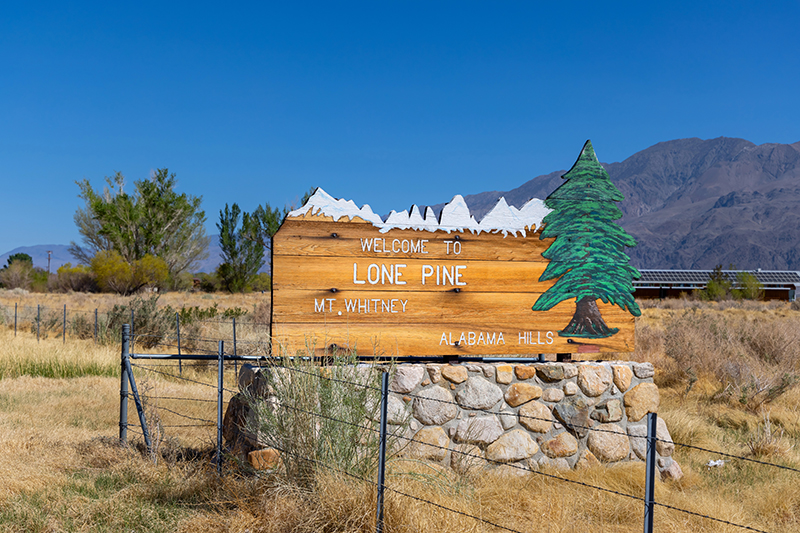
Lone Pine, California, is a small Eastern Sierra community surrounded by some of the most impressive scenery in the state. Located along Highway 395 in Inyo County, Lone Pine is known for its views of Mount Whitney, the Alabama Hills, outdoor recreation, and its quieter small-town lifestyle. In 2026, the local real estate market remains small, but changes to housing rules in Inyo County could make it easier to add homes and accessory dwelling units in communities such as Lone Pine.
Lone Pine Home Prices in 2026
Lone Pine has a much smaller real estate market than major Southern California cities, which means a small number of sales can cause the statistics to change quickly.
According to Redfin data through August 2026, the median sale price over the previous three months was about $402,000, down roughly 1.5% compared with the same period a year earlier. Redfin also reported a median price of approximately $340 per square foot. Because very few homes sell in Lone Pine each month, these numbers should be viewed as a general snapshot rather than a precise measure of every property’s value.
Listing prices can also differ considerably from final sale prices. Realtor.com reported a median listing price of approximately $524,000 for the 93545 ZIP code based on data through July 2026.
More Housing Could Be Coming to Lone Pine
One of the biggest recent changes involves Inyo County’s efforts to make it easier to build additional housing.
The county has been reviewing its zoning and development standards to encourage more infill housing and accessory dwelling units, commonly called ADUs, in Lone Pine, Independence, and Big Pine. Infill development generally means adding housing to land within an existing community instead of expanding development farther outside of town.
This could give some property owners more options to add housing on land that is already developed.
Inyo County Changes Residential Zoning Rules
In August 2026, Inyo County adopted changes to several sections of its zoning code. The changes address issues such as residential setbacks, ADUs, accessory buildings, parking requirements, and how many housing units may be allowed on certain properties when the General Plan already supports the additional density.
For Lone Pine property owners, these changes could be important when considering an ADU, additional residential unit, or redevelopment of an existing property.
Property owners should still check the zoning and requirements for their specific parcel before assuming that another unit can be built.
Housing Supply Remains a Challenge
Housing availability continues to be an issue throughout Inyo County. The county says there are not enough housing options to meet demand, which can make both renting and buying more expensive.
The county points to several reasons, including higher construction costs, limited private land available for residential development, and some existing homes being used as second homes or vacation properties.
There are signs of additional construction, although the numbers remain relatively small. In 2025, Inyo County received permits for 23 new housing units, including 11 single-family homes, three manufactured homes, and nine ADUs. That was seven more housing units than in 2024.
Wildfire Protection Is Also Getting Attention
Another recent change involves wildfire protection around Lone Pine.
A new Lone Pine Riparian Resilience Project is designed to reduce wildfire risk near the community by removing or treating vegetation in strategic areas on Los Angeles Department of Water and Power property.
The project includes work in riparian areas and nearby uplands where vegetation could contribute to wildfire risk. The project was identified in local and regional wildfire planning efforts.
Wildfire protection can be an important real estate issue in rural California because fire risk can affect homeowners, insurance availability, property maintenance, and future development.
What the Changes Could Mean for Lone Pine Real Estate
Lone Pine is unlikely to experience the type of rapid housing development seen in larger California cities. Its limited land, small population, and remote Eastern Sierra location naturally keep the housing market relatively small.
However, the 2026 zoning changes are important because they could make it easier to use existing residential land more efficiently. Additional ADUs and infill housing could gradually increase the number of available homes without dramatically changing the size of the community.
For buyers, Lone Pine continues to offer a very different real estate environment from Los Angeles and other large Southern California markets. For existing property owners, the changing housing rules may create new possibilities for adding living space or additional housing, depending on the property’s zoning and other requirements.
As Lone Pine continues to balance housing needs, tourism, outdoor recreation, and preservation of its Eastern Sierra setting, these changes will be worth watching in the coming years.